
Here are some misinformation education tools:
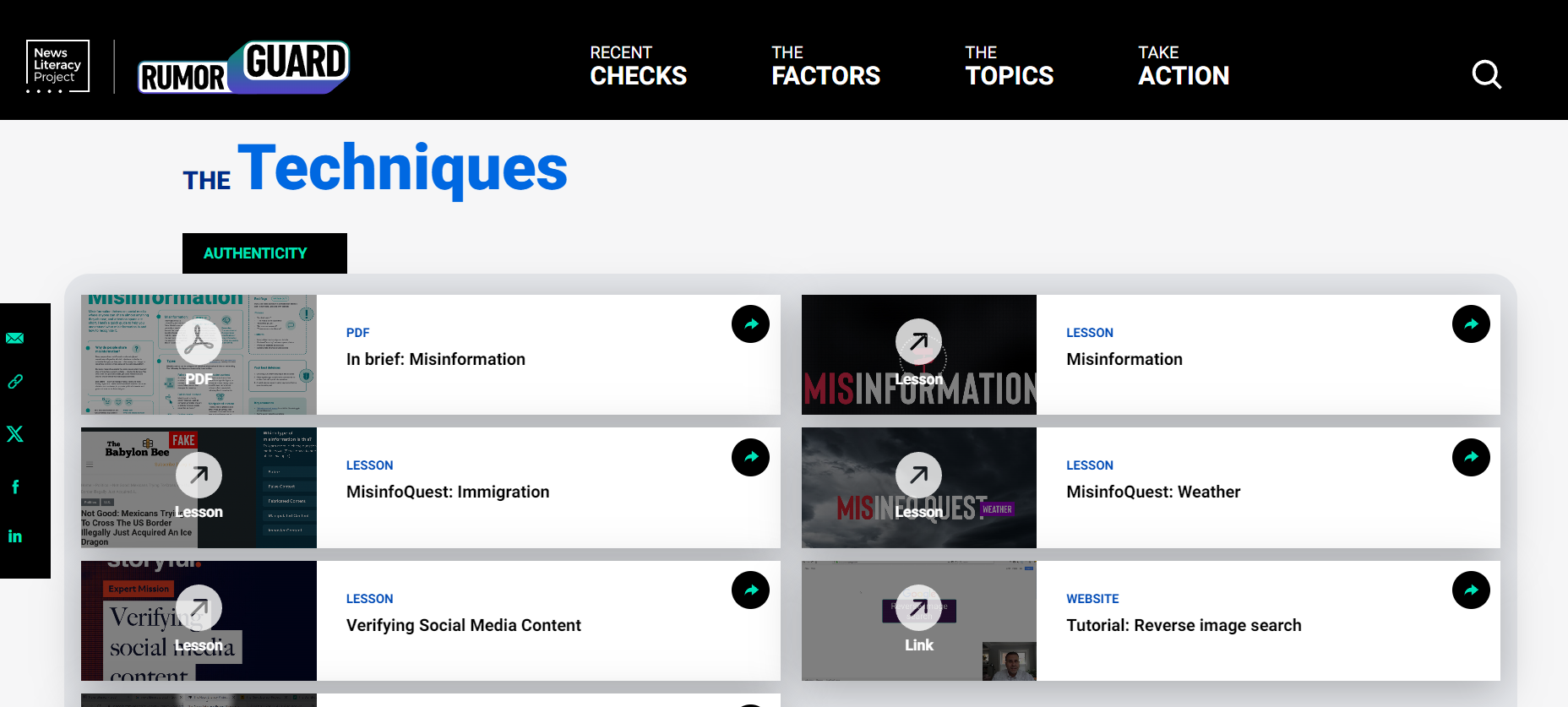
The first tool is RumorGuard. I like the way this website fact-checks. The site uses five pillars of credibility. The stories get a rating for truthfulness based on these factors: Authenticity, Source, Evidence, Context, and Reasoning. The expansive investigation questions the credibility of the source and what evidence proves the claim true. Next, the context of the information presented is evaluated. Finally, the logic and reasoning are critiqued, along with the authenticity of information (has it been edited, changed, or fabricated). One inviting aspect is the buttons under each article, linking full stories under the headline and giving explanations of the determined. I can see limitations in the website’s headline format. The salacious nature of headlines complicates utilizing this resource because, as Rianne Pieffers said in their article on Mores (found on Medium), an average of 70-80% of people read headlines to see a bite-sized variant of the story. The former relieves the need for context, not learning how to think. However, as the Harvard School of Public Health found, negative headlines can drive clicks toward the content. So, this headline style is double-edged. The site’s navigation is helpful, with links sharing how these factfinders discern credible versus incredible.
I think the website works very well as a collection of critically evaluated popular news stories OR a learning platform/website. The hybrid of the two is too much information to indulge, I felt like I had to engage very slowly, only reading one article or video per visit. This experience parallels what Kim Mills and Dr. Mark in Speaking of Psychology at the APA communicated, we multitask so much and must have breaks to engage and learn. This way, I can see the site as useful as a teacher’s resource, assigning topics based on the factors and techniques.
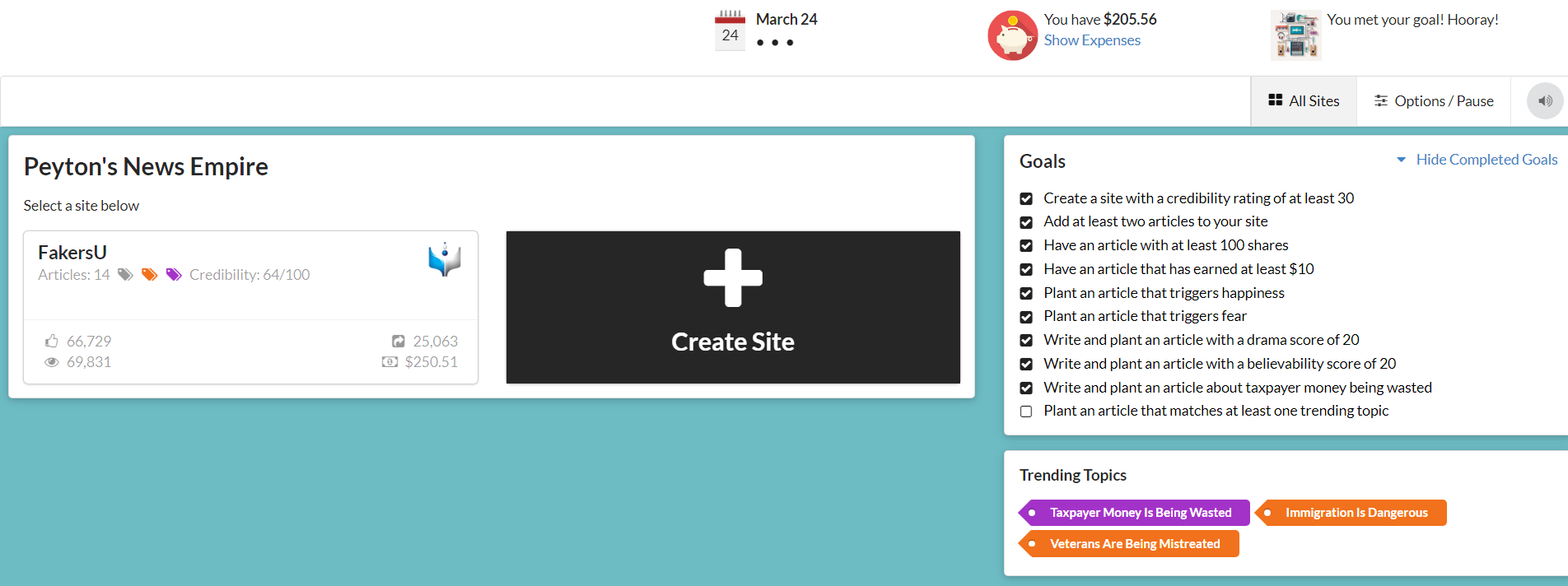
Fake It to Make It is a game wherein you create and propagate misinformation for money. The tool teaches you from the backend how easy it is for someone to create a persona and unleash a plague of misinformation upon the unknowing internet. A younger me could’ve been tempted by this gamifying disinformation simulator. It immediately brings to life what Ja’Mea Thomas at Empower regards as Strain theory, which states that individuals are likely to commit more ambiguous acts given drastic economic problems. The game starts with the premise that you’re paying rent, buying a car or hobby equipment, and detailing manageable ways to get what you need. In the game, there is a drama score and a credibility score you leverage. Writing and planting articles with high drama and low credibility is riskier. Conversely, it’s safer with low drama and high credibility, but good luck getting clicks. This is all based on perception, as you use disinformation tactics like sharing details but leaving out context to build said credibility. You go through the process of copying articles from other sites, buying profiles with credibility and connections, and then sharing these articles with your target groups. The game gives you goals like “plant an article that generates fear,” and you use keywords to send them to specific audiences. Copying and sharing articles can give you the money you need; that’s straightforward. This concept is exciting, Janelle Cox posits the myriad benefits of video games in education (especially with younger kids), but I fear the implications of feeding ideas to impressionable audiences. If they already need to be taught that this is wrong and how it works, then what is the likelihood they’ll chalk it up to moral ambiguity and see it as a good and profitable business.
Thank you,
Peyton
Leave a Reply